Global Illegal Gambling Market Hits $50 Billion as Operators Target UK Consumers
Klara Schmidt · Sep 10, 2026

Global Illegal Gambling Market Hits $50 Billion as Operators Target UK Consumers
The Betting and Gaming Council drew attention in September 2026 to new figures from Fincord Intelligence that placed gross revenue from the worldwide illegal online gambling sector at around $50 billion for 2025, and the data pointed to roughly 5,000 operator structures running more than 15,000 active websites and apps.
Those structures relied on cryptocurrency for 35 percent of all payments last year, a share that analysts projected could climb past 70 percent by 2030, while mirror sites, VPN routing, and direct outreach to self-excluded UK players registered with GAMSTOP formed the core of their operational tactics.
Scale of the Illegal Market According to the 2025 Data
Research compiled by Fincord Intelligence tracked revenue flows across unregulated platforms and showed that illegal operators generated the reported $50 billion through a combination of sports betting, casino games, and poker rooms that operated outside any licensed jurisdiction, and the same study counted approximately 5,000 distinct operator structures supporting more than 15,000 individual sites and mobile applications.
Payment patterns revealed cryptocurrency already accounting for 35 percent of transactions, with forecasts indicating that digital coins could handle over 70 percent of illegal gambling payments within five years, and observers noted that this shift reduced traceability for regulators while accelerating fund movement across borders.
Methods Used to Reach UK Players
Illegal operators deployed mirror sites that replicated blocked domains within hours of enforcement action, and they paired those tactics with VPN recommendations that allowed users to mask their location and bypass geo-blocks, while targeted marketing campaigns specifically approached individuals who had already joined the GAMSTOP self-exclusion register.
The strategy of contacting self-excluded UK gamblers created an additional layer of risk because those players had previously signaled an intent to limit their activity, yet the unregulated sites continued to send promotions and login links through email, social media, and push notifications, and the BGC statement emphasized that such practices extended consumer exposure well beyond standard regulatory concerns.
Statement from BGC Leadership
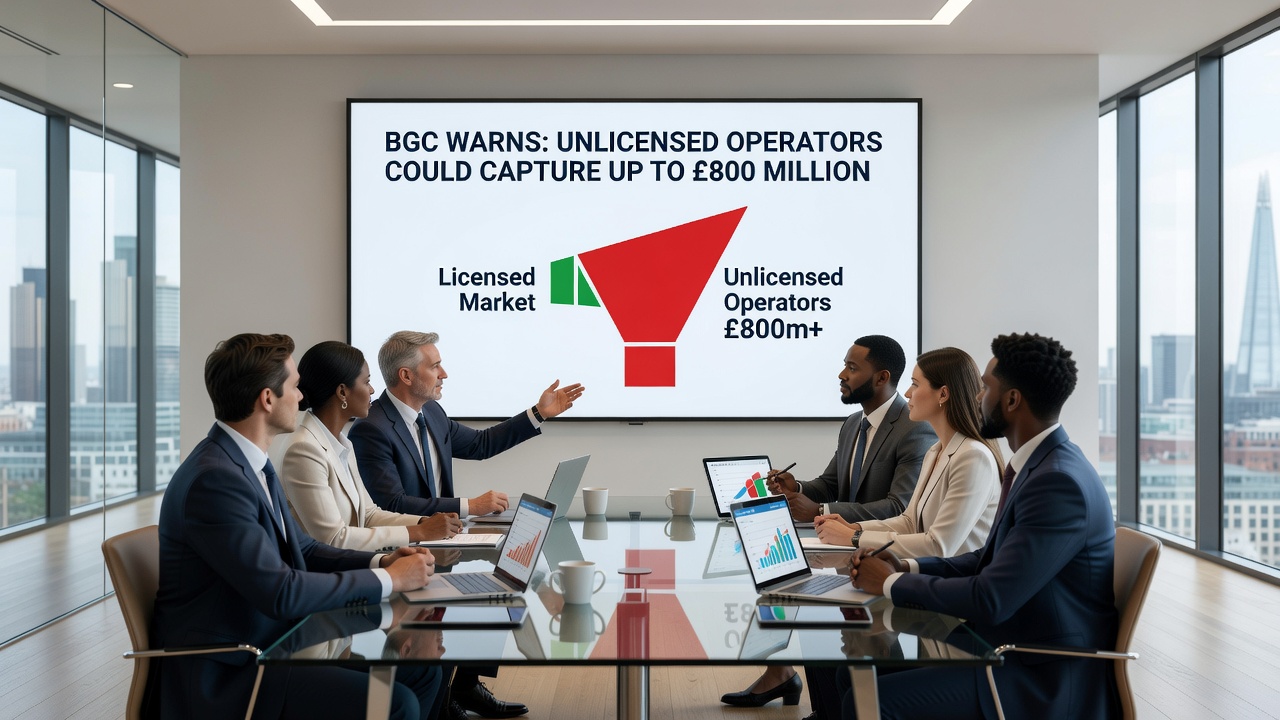
BGC chief executive Grainne Hurst addressed the findings directly and stated that the scale of the illegal market and its focus on UK consumers represented risks that extended past routine licensing matters, and she noted the combination of cryptocurrency adoption, mirror sites, and GAMSTOP targeting required coordinated responses from both industry and government bodies.
The council framed the $50 billion revenue estimate and the projected growth in crypto payments as evidence that enforcement resources needed to match the technical sophistication of the operators, and Hurst underscored that consumer protection measures remained central to the discussion even when activity occurred on platforms located outside UK jurisdiction.
Payment Trends and Future Projections
Data collected for 2025 showed that while traditional payment rails still processed the majority of illegal transactions, cryptocurrency had already captured 35 percent of the flow, and the same modeling suggested that share could exceed 70 percent by 2030 because of speed, lower fees, and reduced oversight compared with bank transfers or card networks.
Operators continued to adapt their infrastructure by rotating domain names and encouraging VPN use, which allowed them to maintain service continuity even after individual sites faced blocking orders, and teh research indicated that these technical measures contributed directly to the overall revenue growth recorded in the illegal sector.
Implications for UK Consumer Protection
The BGC highlighted that illegal platforms actively sought out self-excluded players through GAMSTOP data leaks or social engineering, and this activity created documented cases where individuals who had voluntarily restricted their access later received direct offers from unregulated sites, and the council positioned the issue as one that affected both financial security and responsible gambling frameworks.
Figures from the report also showed that the 5,000 operator structures maintained operations across multiple jurisdictions, which complicated enforcement because each structure could control dozens of sites and apps that changed locations frequently, and the combination of these elements produced the $50 billion revenue total for 2025.
Conclusion
The September 2026 statement from the Betting and Gaming Council summarized the Fincord Intelligence findings as a clear signal that illegal online gambling continued to expand while adopting payment and access technologies that challenged existing safeguards, and the reported $50 billion revenue, the 35 percent cryptocurrency share, and the documented outreach to GAMSTOP users formed the core facts presented in the release.
Those details, drawn from the single research report referenced by the council, illustrated how mirror sites, VPNs, and targeted marketing combined to sustain operator structures that numbered around 5,000 and supported more than 15,000 websites and applications, with projections indicating further growth in crypto usage by 2030.